Thru Grand Capucin
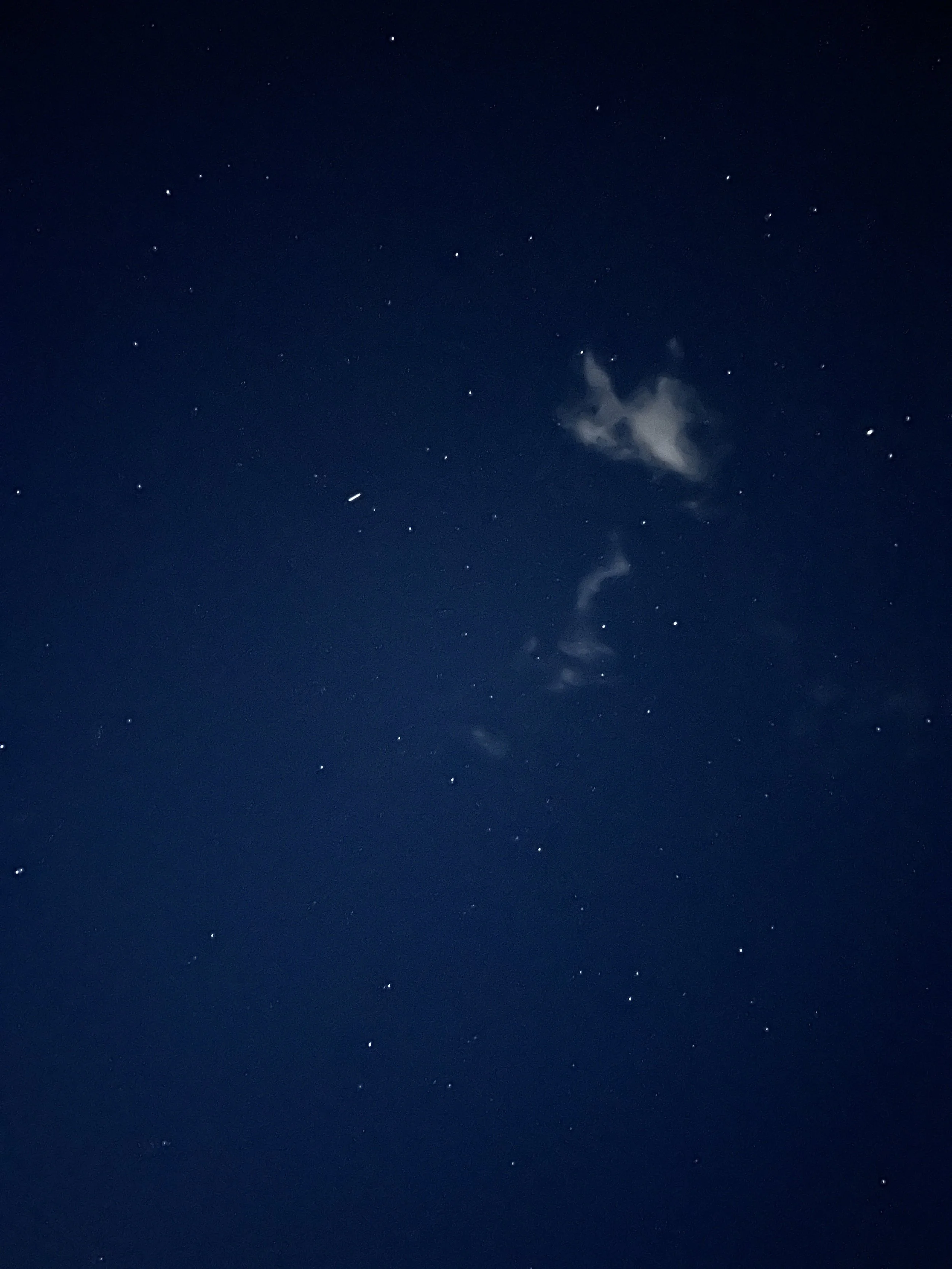
Below a clear night sky, we lay quietly beneath the Alps.
The stars were visible, inviting and peaceful. I zipped my sleeping bag and watched the slopes of the Grandes Jorasses fighting to stay bright as the darkness slowly swallowed the mountain. The day before we approached our objective, Radovan and I had found a place to sleep in the open air, just below the Mont Blanc massif.
There was something deeply appropriate about spending the night outside, under that sky, before climbing one of the most beautiful granite towers in the Alps.
A long time ago, I started thinking about how people set alpine objectives that call for adventure. I thought it was something that comes with experience, instincts, and careful observation of your progress, needs and visions. That’s how you come to the objective, I thought. This time, our main objective in the Alps was climbing the Grand Capucin via the Swiss route. I heard about Capucin years ago in the mountain hut of Ceples, below the peak of Solunska Glava. I was there for a remembrance ceremony for Macedonian mountaineers who had tragically lost their lives in 1995. Many mountaineers were there, talking expeditions and some climbs that all of them considered worthy — Capucin was one of them. Since then, it has been on my mind.
The time had been moving rapidly since then. A lot of changes in my way of thinking, training and approaching mountains have happened. As winter was ending, I started thinking about future objectives in the mountains, specifically in the Alps. One day, as I was climbing in Matka, I lost myself looking at the canyon and belaying my friend. Actually, that was deep thinking, in a way, that brought me back to the idea of Capucin after years of not connecting with it. That is one of the strange powers of the human mind. We absorb ideas, experiences and dreams, and sometimes we store them somewhere deep inside us, waiting until we have grown enough to understand them. Maybe that is how objectives are born.
Since the first time I saw him move on the rock, I thought this is it —this is the style I really like—calm and precise, with courageous moves beyond the last pro. Radovan was my partner in all the big climbs, for me, that I took part in. We knew each other for years now, and we shared beautiful, scary and valuable experiences together across the Balkans. It was a logical step for us to go and try the most beautiful granite in the Mont Blanc massif — Grand Capucin.
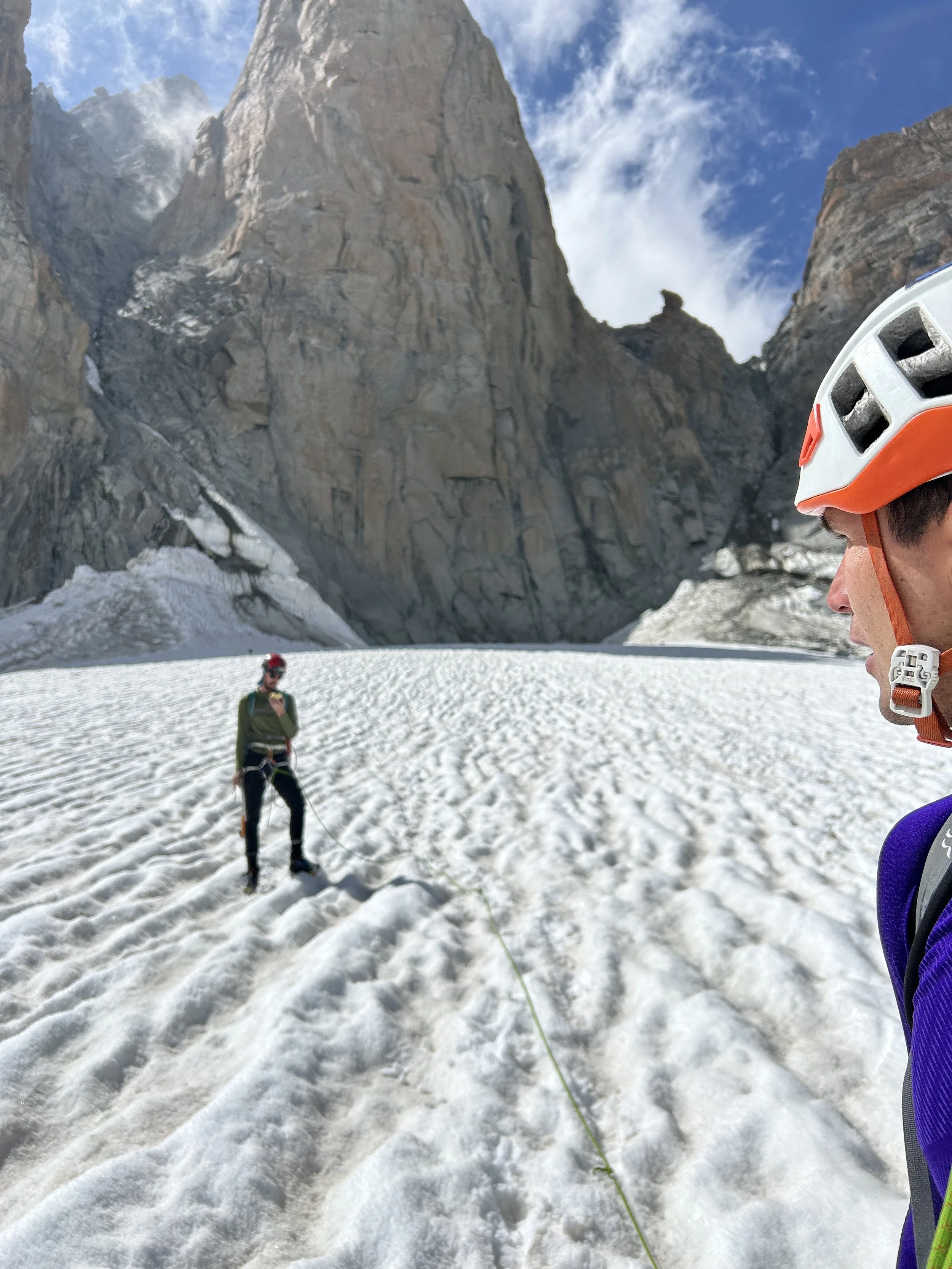
After our sleep below the beautiful alpine sky, we raised our strong and healthy bodies from the ground. The following day, we found ourselves exploring the snow track leading to Capucin. Shortly after, we saw a granite tower standing high and tall, dancing with the clouds. It took only a moment to understand why climbers speak about this place with such affection. The tower has a presence. It dominates the glacier around it, not simply because of its height, but because of its shape, its colour, its verticality. We were ready to receive that energy, to let it flow into our DNA, into our deeper layers in our complex human personalities, as we all are. Grand Capucin is a granite tower standing at 3,838 meters. It’s located in the Mont Blanc massif, and it contains one of the best climbing routes in the Alps.
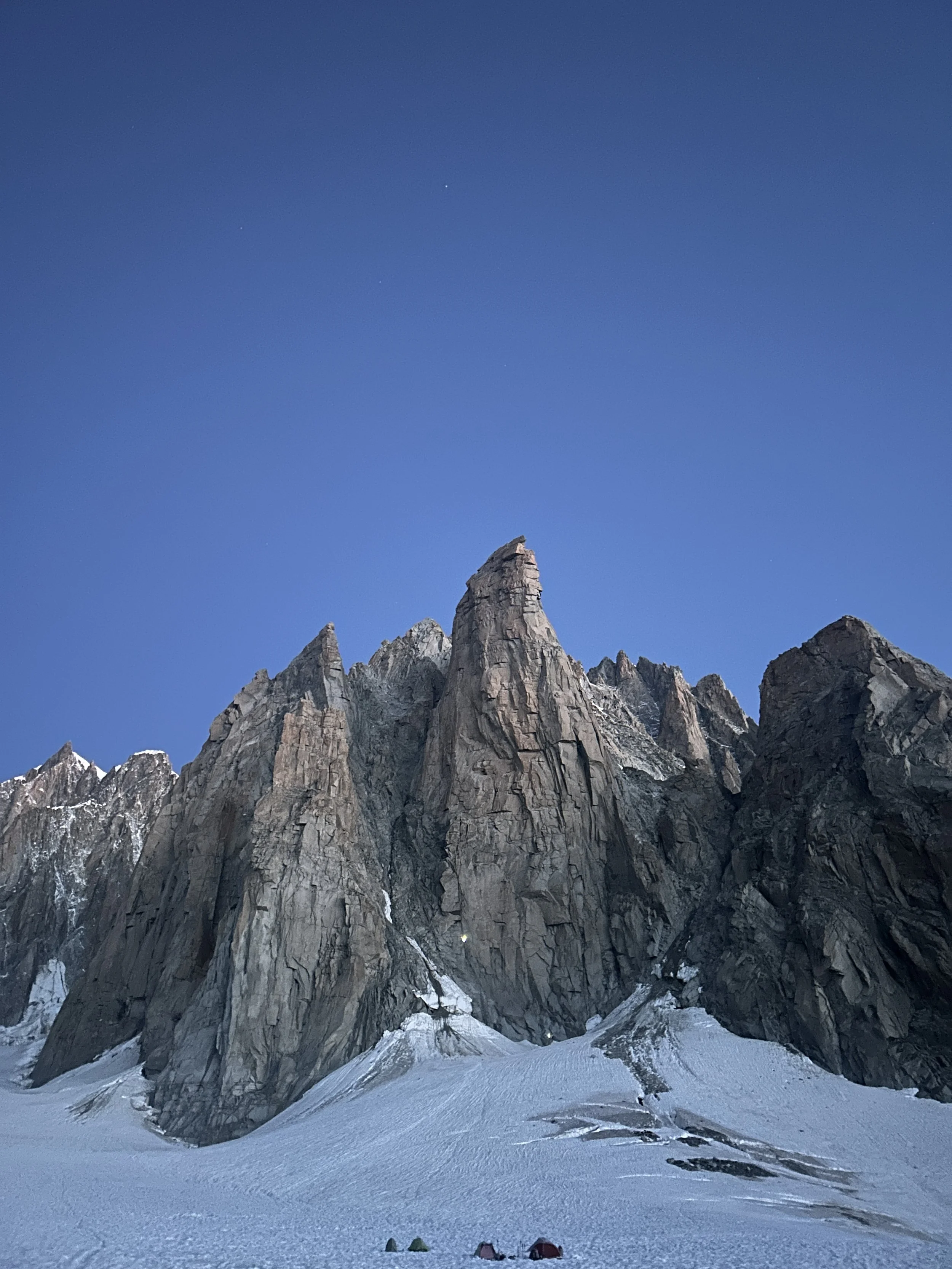
03:45 am. As if we were back in the military — steady and ready for whatever was coming — we jumped out of bed and got to work. The work of the day promised adventure. A journey that could challenge our beliefs, test our preparation and leave us with one more valuable experience.
I was surprised how fast we approached Capucin from the hut. Our steps were smooth and fast, and we got into the climbing flow even before we actually started climbing. That’s something I always try to do before every climb. I walk with the same precision with which I want to climb. Every step becomes deliberate. I imagine my feet on the rock, the rhythm of movement, the efficiency. It helps me find the flow before the real climbing begins. The glacier was stable, with fewer crevasses and easy to travel on. Capucin is standing in front of us, being ready for every climber that will attempt that day. Although it was super early, we already saw headlamps climbing into the lower pitches of the Swiss route, the route we are here for.
There was one uncertainty we had not been able to resolve before arriving. And that was the bergschrund at the very start of the route. That is a frozen snow field on top of a glacier that gives you access to the higher pitches of the route if it’s there. Unfortunately, it was not there, or better said, it had collapsed. That means we must start our climbing from the bottom of the rock. As we approached the rock face, we saw two guys getting ready for their day. They were the two Italians we saw yesterday. “Buongiorno” and “Dobro utro” gave their hands, and the climbing race started. Although it was not a race, we were in the mood for that. Our progress was generally faster, but whenever we caught up with them, we stopped and gave them space. Following locals in such climbs is a smart choice. They were strong and efficient; that helped us navigate easily, although our readiness for the route was on a high level, as we always prepare well.
The route is 450 meters long and contains very solid climbing with grades up to 6b, mostly 6a to 6a+. We knew where the harder pitches were. We knew the possible variants. We knew what we were looking for. The cracks in the rock were inviting to put pro and secure yourself. We started climbing with the standard alpine kit, except for a hammer and pitons. We decided to go with the strategy of bringing one backpack, leaving the one who leads not wearing anything on his back. That proved to be a nice strategy; however, we were sure about what we cut in terms of water and food.
At Rifugio Torino, after reading, re-reading, and discussing the topo, we met two Italians who will attempt the same route tomorrow morning. They were very nice and shared what they know about the route, since they have been around more times so far. “Time for bed, see you tomorrow, have fun!” said one of them before everyone disappeared into their beds.
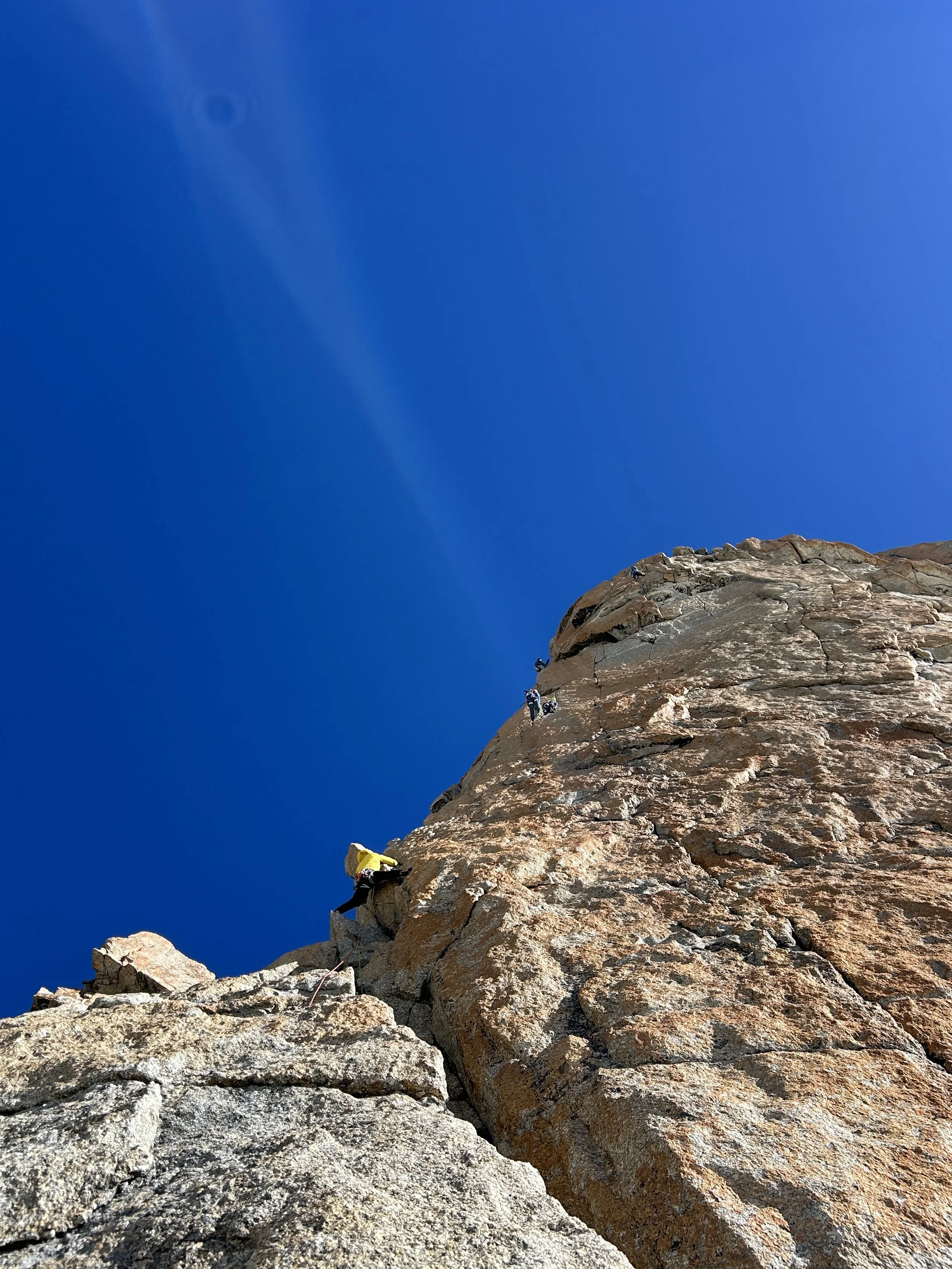
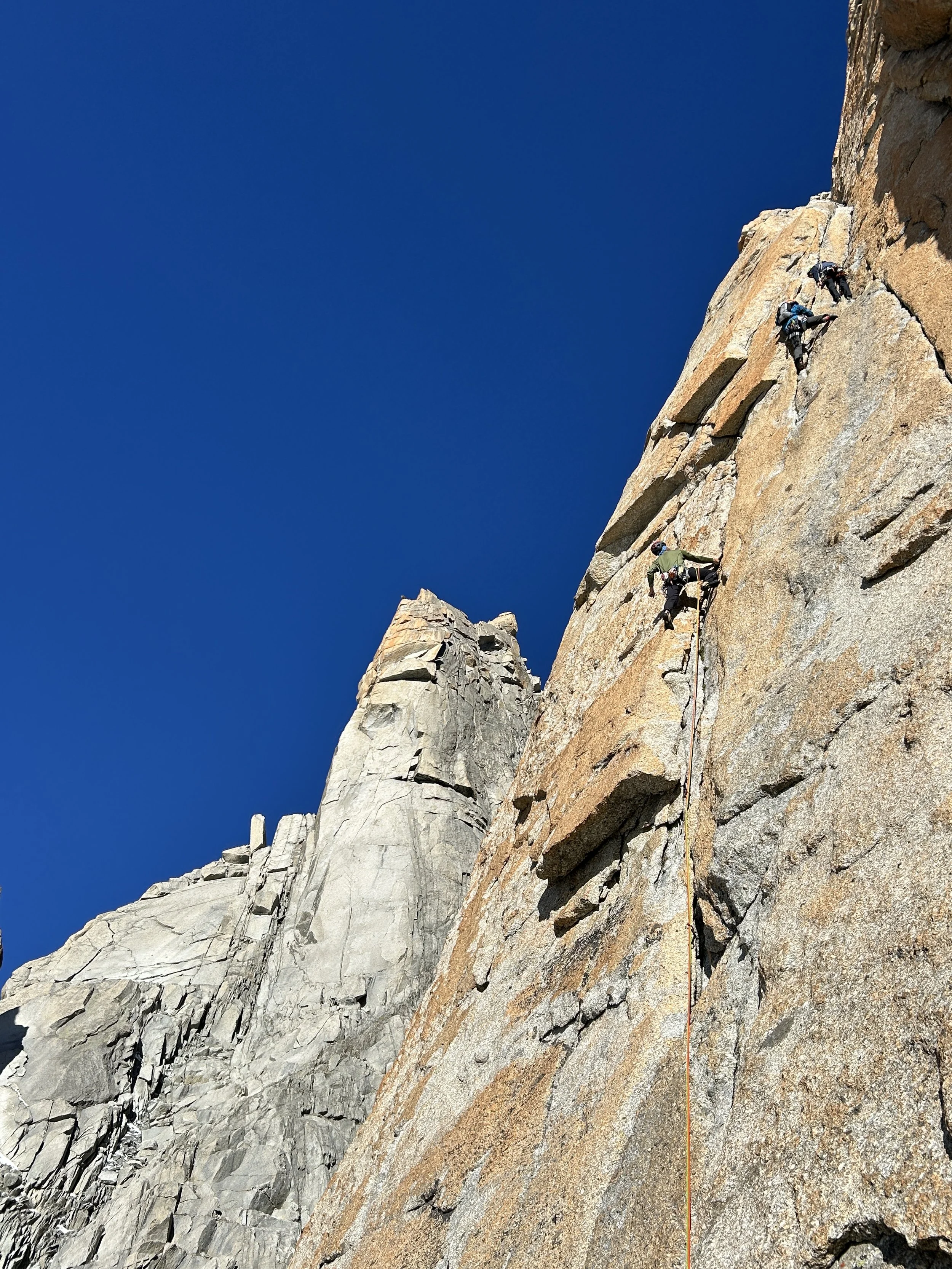
What I love about climbing is the constant physical and mental challenge that follows you from start to finish. It’s not a 30-minute workout or a run in the woods — it is something my soul strives for. As we climbed higher on the route, we finally reached the hardest pitches, which were indeed hard. Nice, logical, slippery and steep cracks followed our climbing. Once the sun went behind a cloud, or we changed direction and were not facing the sun, it became really chilly. These things are also part of high-alpine climbing, as we all know; however, we had very stable, nice weather for most of the climbing.
Days before our climb, I exchanged some messages with Vincent, a Canadian alpinist who recently freed the Slovak Direct on Denali. I had seen him in Chamonix and asked about conditions in the Alps. His answer changed something in the way I think about choosing objectives in the Alps. In general, considering the heat wave that is happening more and more in the Alps, choosing objectives in the Alps is a skill — I learned. As we were climbing, tons, I mean, tons of rock fell from the mountain next to Capucin. It was the most disgusting and disturbing sound of all.
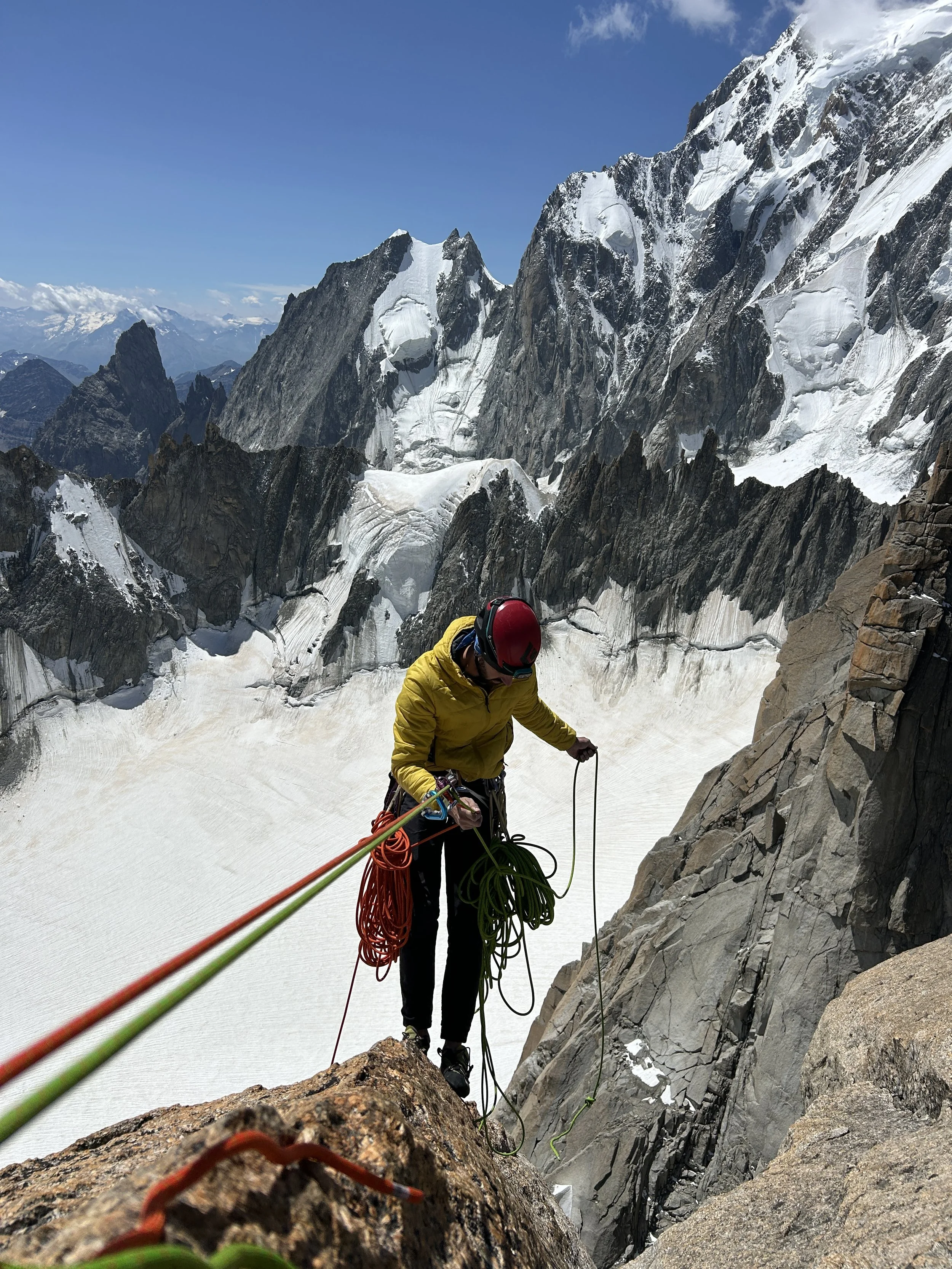
Luckily, our focus was sharp and on point, so we succeeded in climbing the hardest pitches as efficiently as possible. On the way up, we came to a 25 m pitch of 6a+, an incredibly obvious crack climb which demands strength as well as technique. I was following that pitch, taking off the pro that Radovan used and enjoying the sun before entering the shade where my hands froze. Radovan took the lead again up to a slab pitch where I watched smooth climbing and commitment. The two Italians went on another variant before the summit, and we saw them as I started my lead towards the summit. The summit is a small peak with no space for people. It’s not a flat ledge where you can relax and drink some water. It was like a shark tooth. Enjoying the views towards Mont Blanc, I waited for Radovan to reach the summit, where our descent would start — 10 abseils of the full rope to the bottom of Capucin. Our climbing time was, in my opinion, impressive. It took as 7 hours of climbing, starting from 6 am and exiting at 1pm.
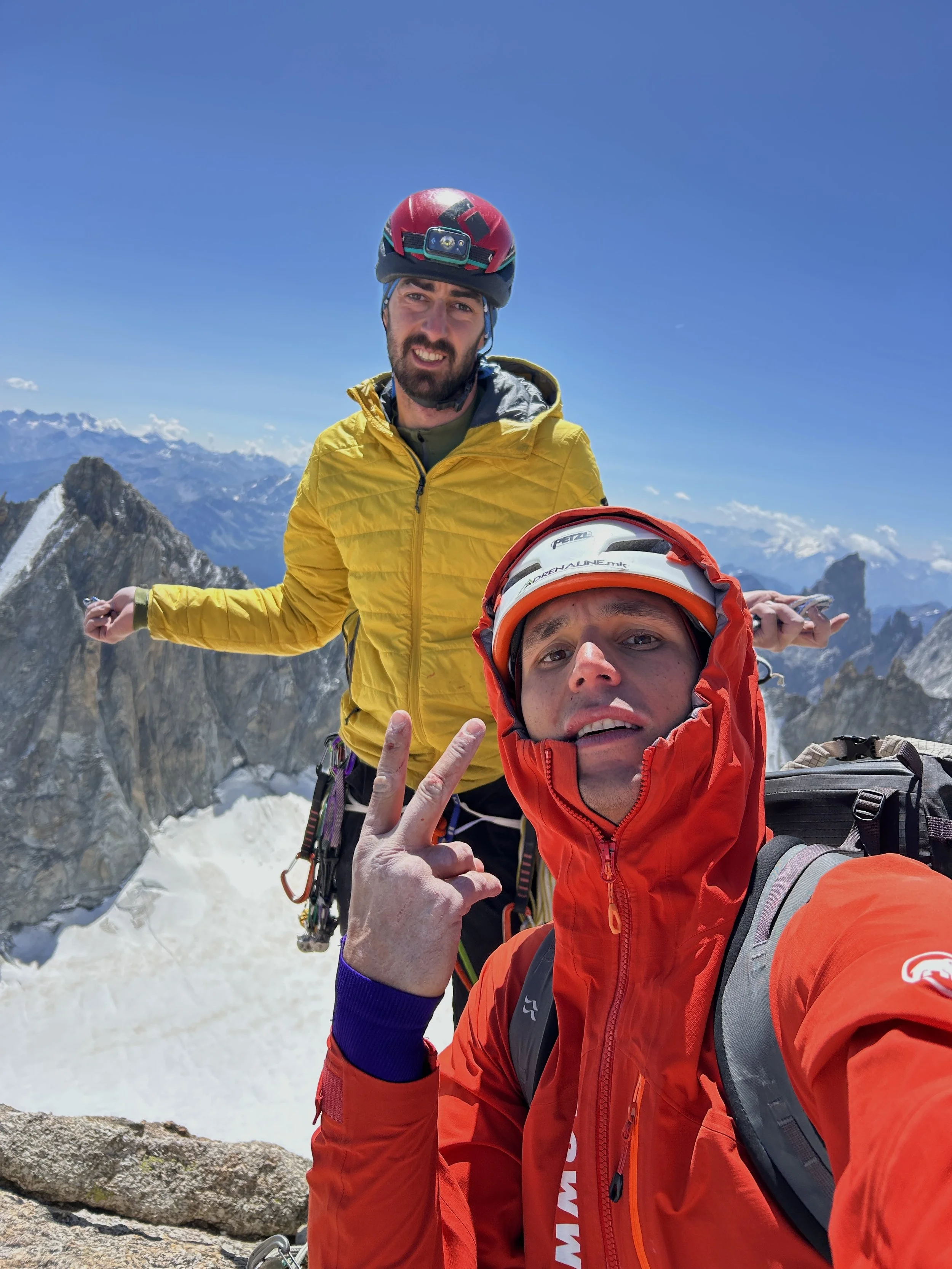
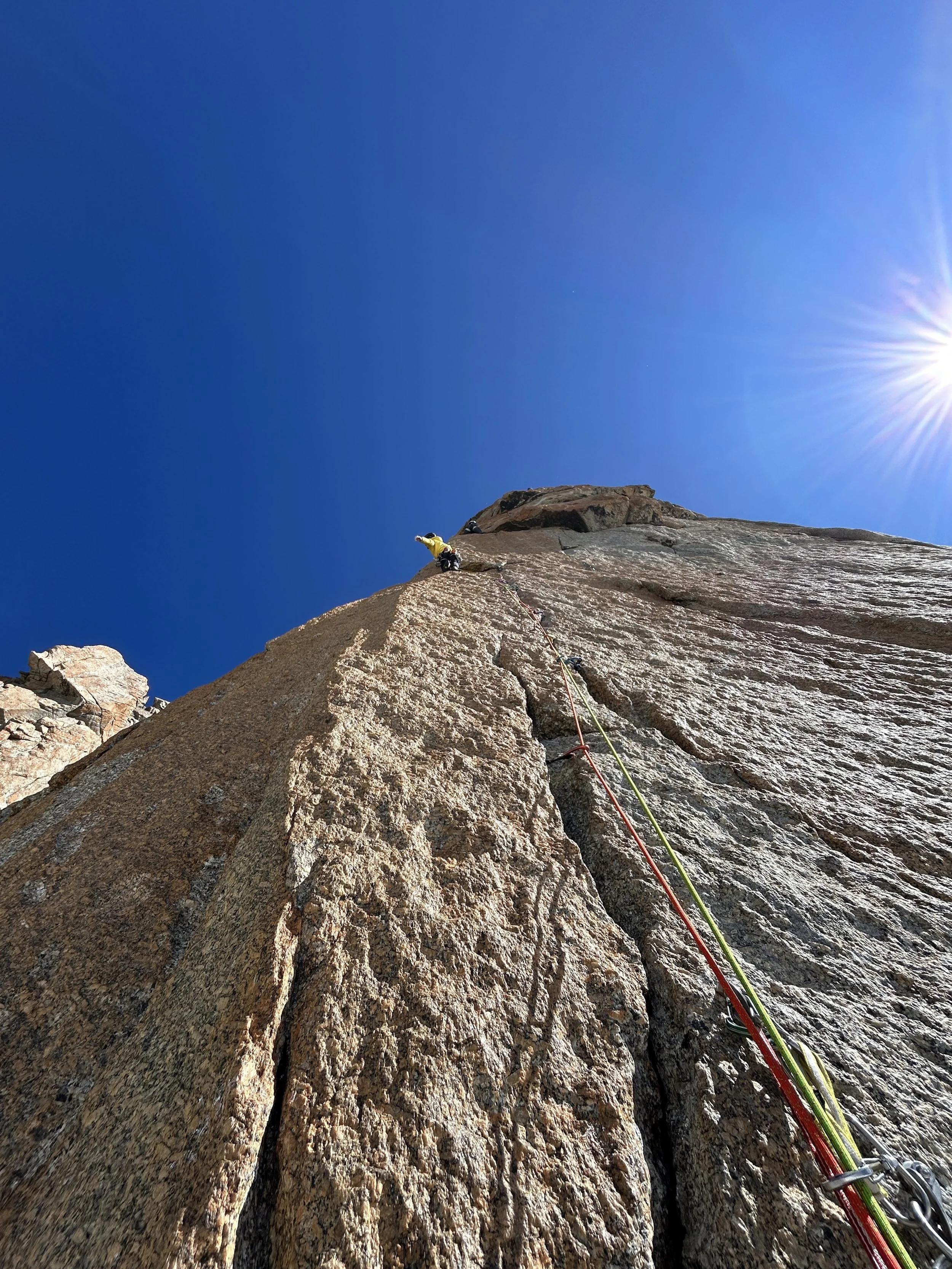
When abseiling, you always double-check. We established a system and started rappelling. We chose to come back via the Swiss route since there are more options to rappel from. People sometimes used different routes to rappel, but in our case, we chose to go for the same since we already knew the anchor spots. On our way down, we saw other parties climbing the upper pitches of the Swiss route, and we were polite and respectful, not rushing into them, keeping in mind that this climb is completely on gear.
Finally, we reached the glacier. It was a wonderful moment for both of us. Switching to our boots and crampons, we started returning to the hut, where we spent one more night. That night, my brain, by its nature, proceeded to dream of future climbs like American Direct or Walker Spur. Awesome adventures are coming on the way, and with the right mindset, commitment, and focus, all is possible.